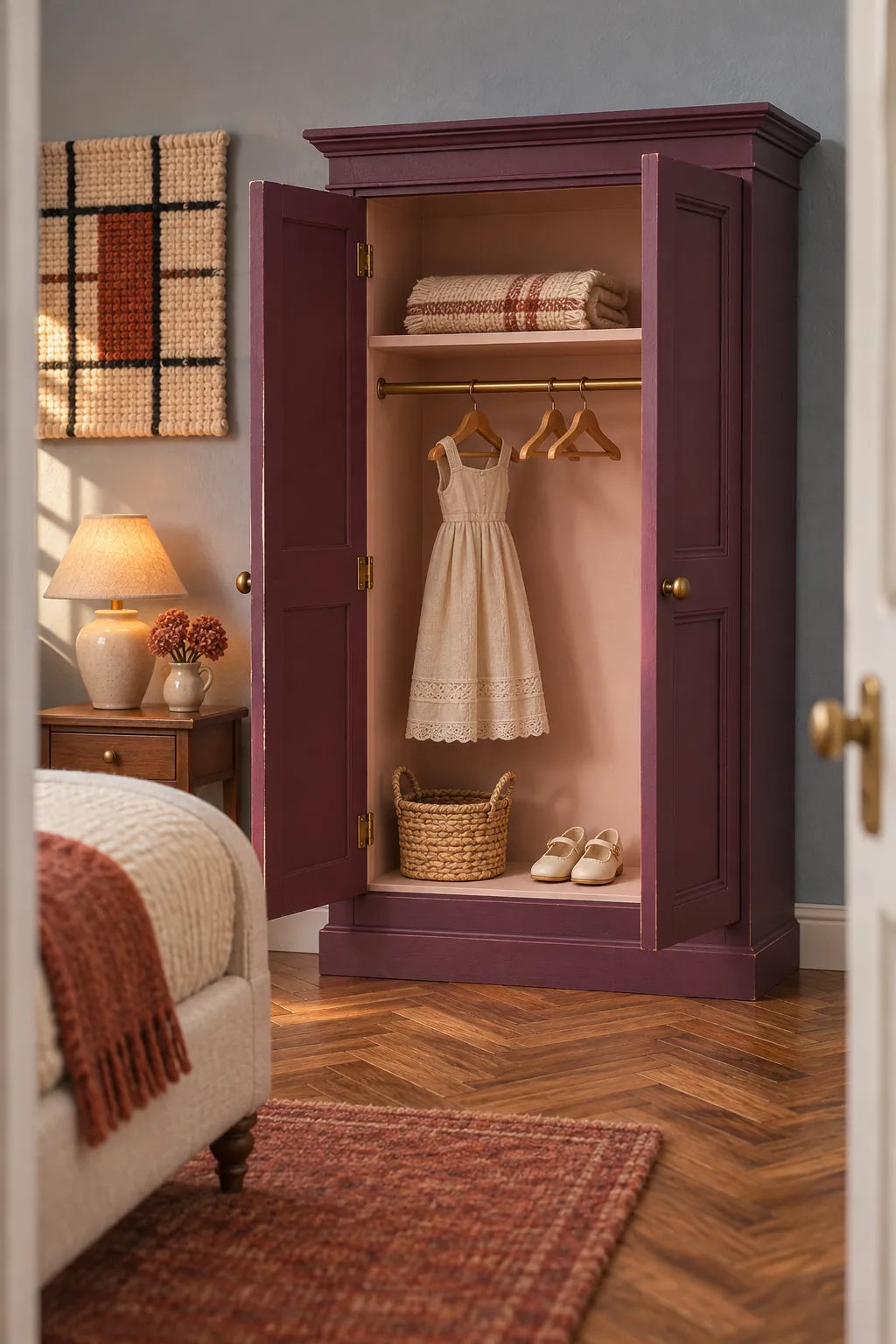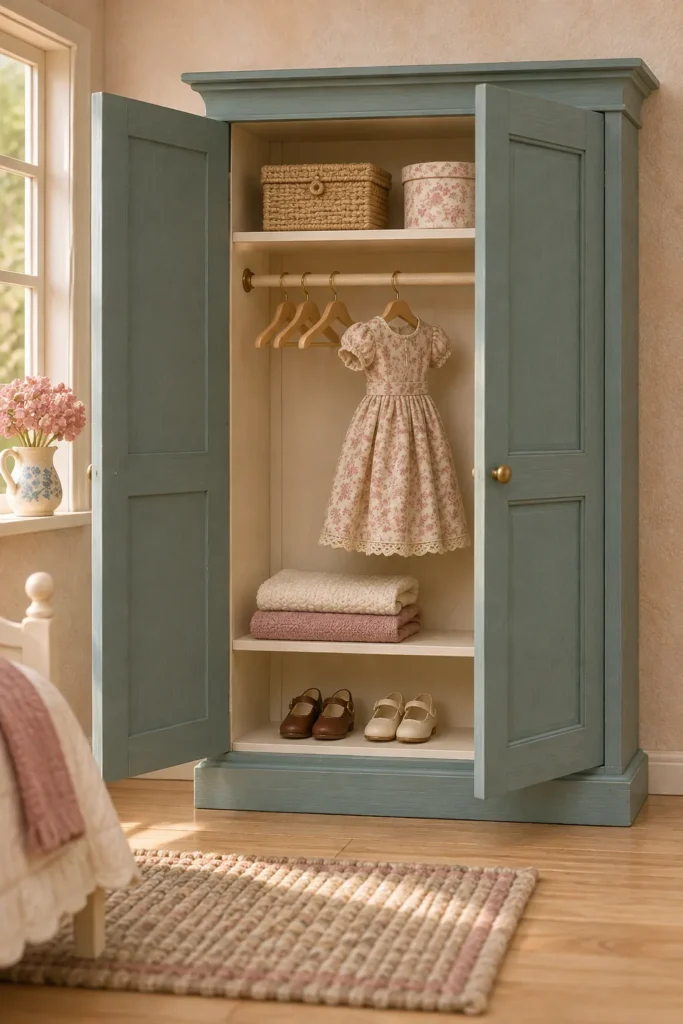
Tall miniature cabinets expose every small measuring error. A side that leans by a fraction can make one door rub, while a thick hinge can create a gap that looks enormous at dollhouse scale. The reliable approach is to build and square the case first, then fit each door to its actual opening.
Plan the wardrobe size and parts
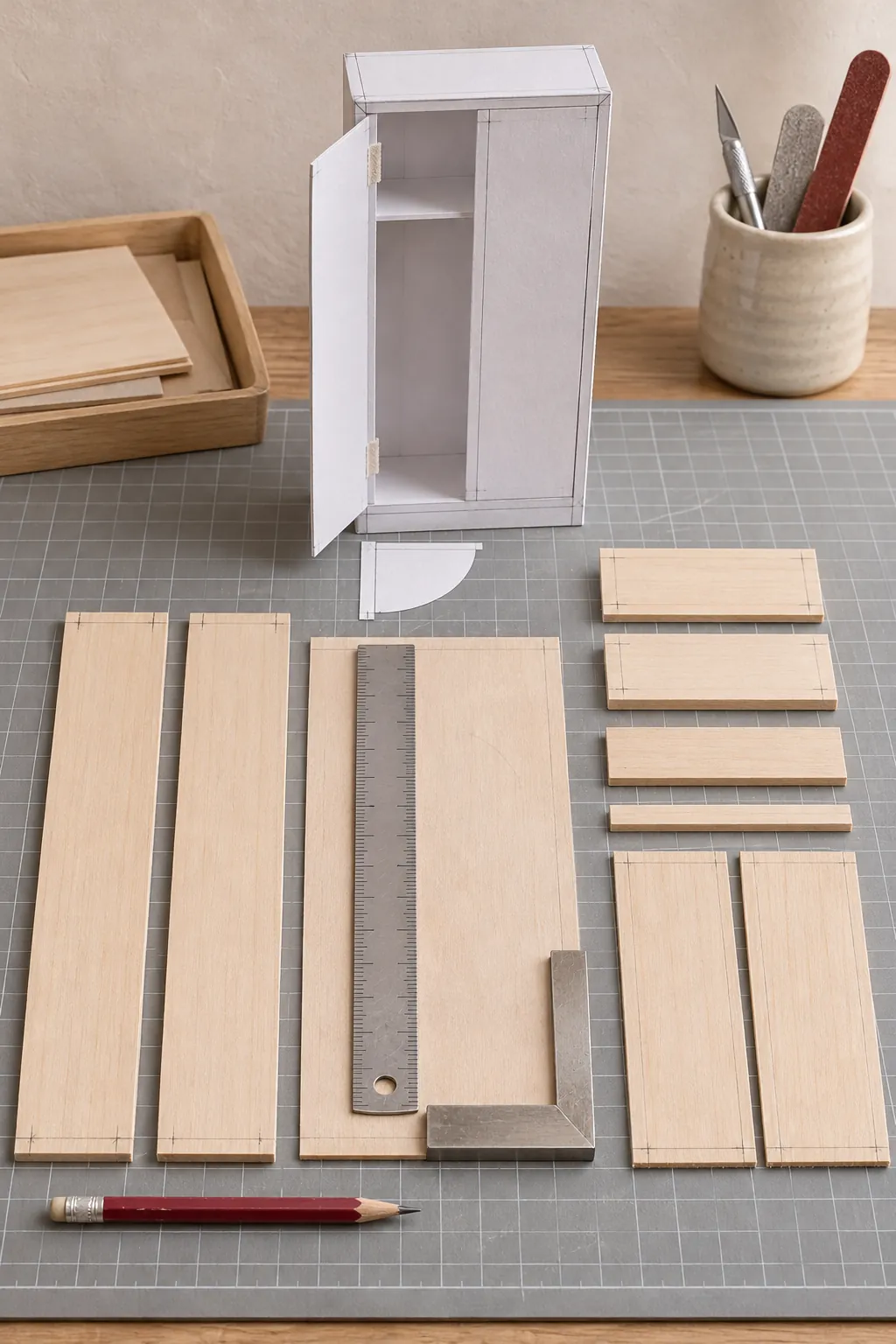
This project uses 1:12 scale and makes a wardrobe about 6 1/2 inches high, 4 inches wide, and 1 3/4 inches deep. Cut two sides, a top, a base, a back, one shelf, two doors, and a narrow lower plinth from 1/16 inch basswood or dense craft board. Mark every part from one metal ruler so matching edges do not collect small measurement differences.
Check the height in the intended room before cutting the final top. Leave enough space above the case to move it into position, and compare the depth with nearby bedroom furniture. A paper mockup quickly reveals whether the open doors will hit a bed, wall, or adjacent cabinet.
Assemble a square cabinet shell
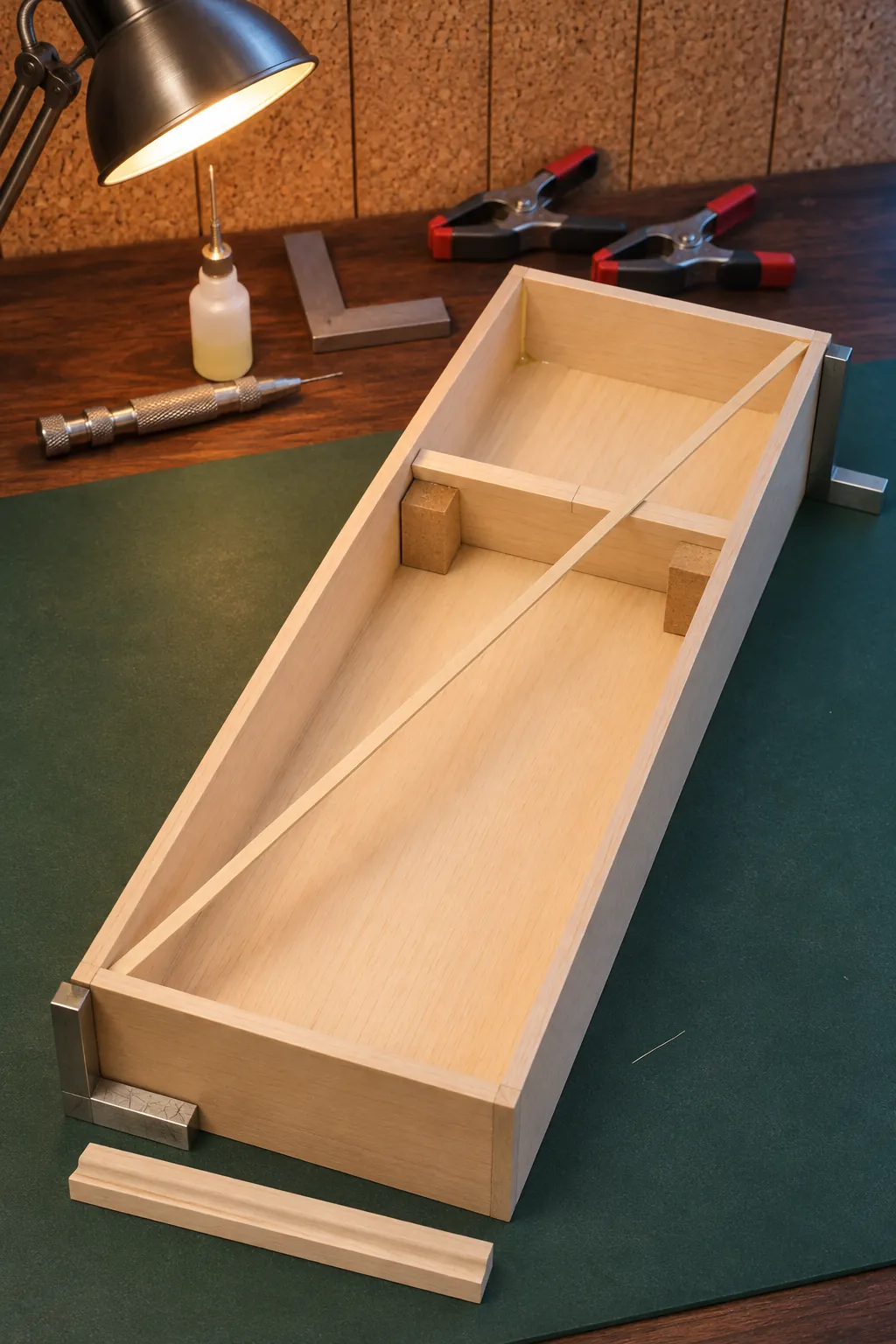
Glue the sides around the base, then add the top while the joints remain adjustable. Place the case face down against a square guide and measure both diagonals, which should match when the rectangle is true. Add the full back only after the frame sits square, since the back locks the shape permanently.
A fixed shelf near the top adds useful storage and helps the tall sides resist bowing. Use two equal spacer blocks to hold it level during gluing. Attach the plinth beneath the front edge so the case gains a stable base without making the side panels appear heavy.
Fit the two cabinet doors
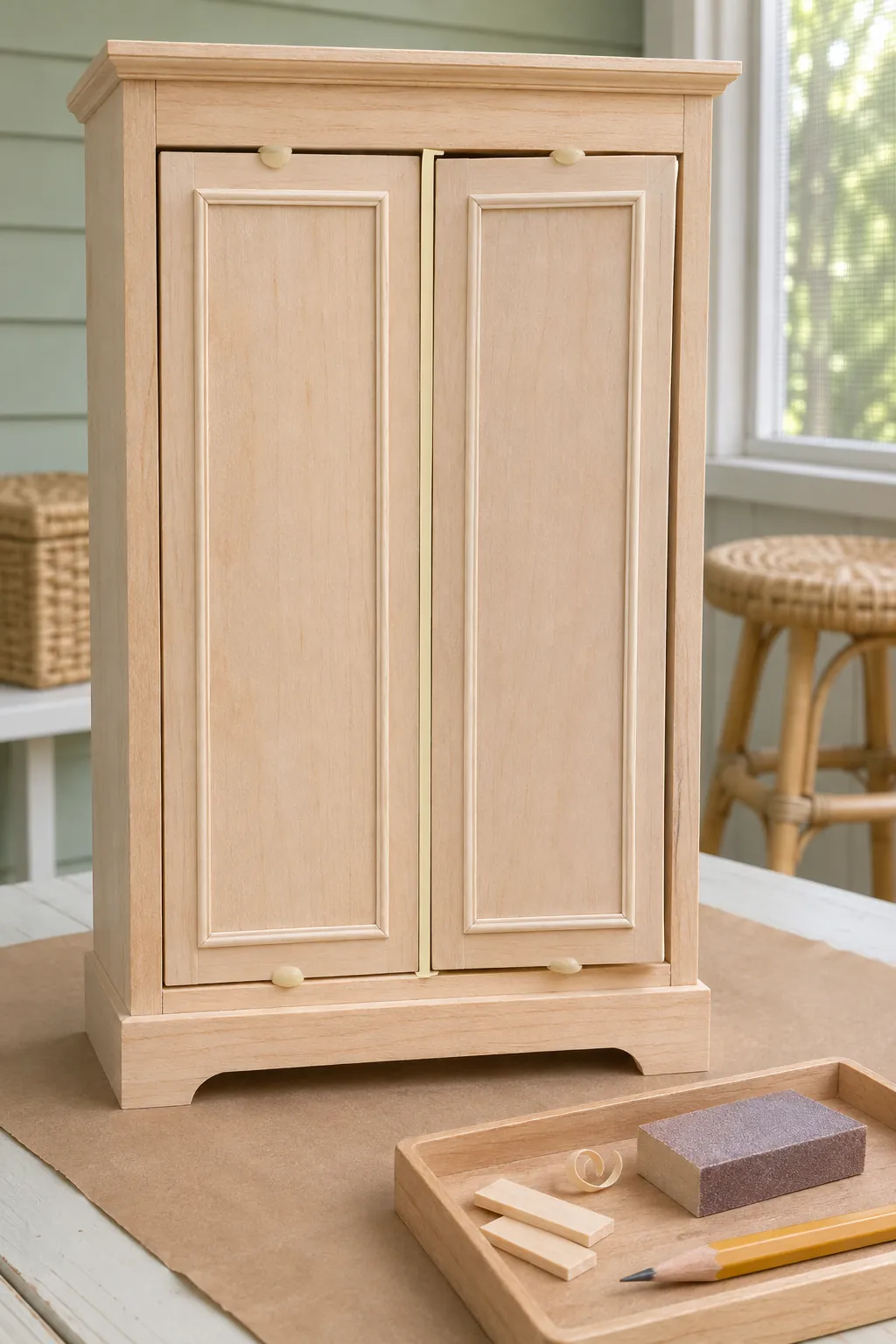
Cut each door slightly larger than its opening, then sand the outer edges in small passes until both panels meet with a narrow center reveal. Test them together after every adjustment rather than perfecting one door alone. The gap should remain even at the top, center, and bottom when the case stands upright.
Applied strips of thin card can create recessed panel detail without weakening the door. Lay both doors side by side and mark the molding positions across them at once. Keep every decorative layer thin because extra weight and thickness make tiny hinges harder to align.
Install working miniature hinges
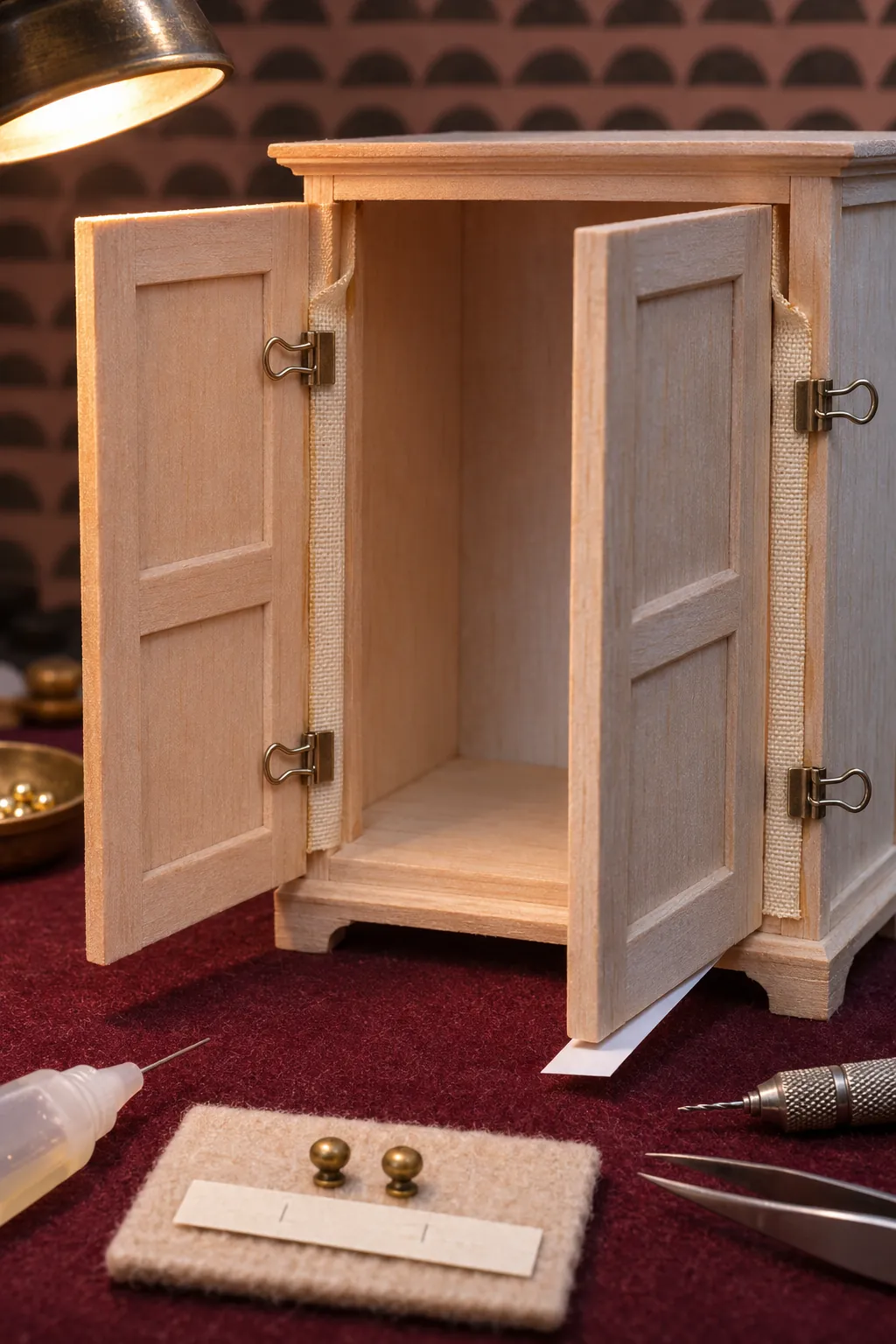
Narrow fabric tape makes a forgiving hidden hinge for light wood or card doors. Glue one half inside the cabinet side and the other half to the back of the door, then close the panel against a thin paper spacer while the adhesive sets. This creates the clearance needed for paint and prevents the door edge from binding.
Tiny metal hinges give a more formal appearance but require exact pilot holes. Tape both hinges temporarily in place, test the swing, and only then mark their fastener points with a sharp needle. Whichever method you choose, fit both doors before adding knobs so the handles can share one level line.
Add the clothes rail and storage
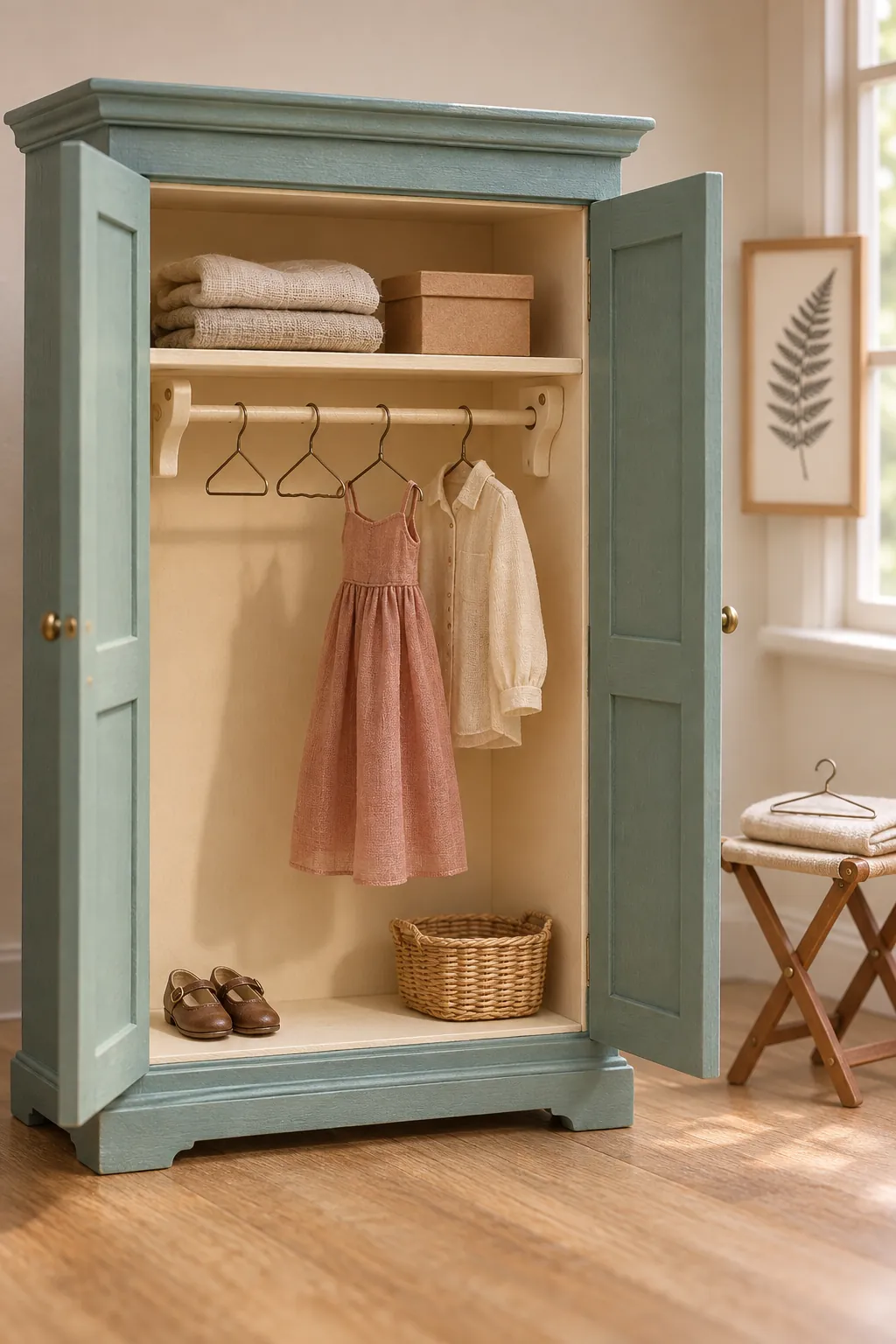
Cut a wood skewer or stiff wire to fit between the inner walls beneath the shelf. Support each end in a small bead or drilled card bracket so the rail remains level and can carry tiny hangers. Test the longest miniature garment before fixing the height, since a low rail can waste the bottom half of the cabinet.
A shallow box or two folded blankets can occupy the upper shelf without hiding the rail. Keep the lower floor clear for shoes or one storage basket. This simple interior feels more convincing than filling every space, and the open doors remain the main functional feature.
Finish and install the wardrobe
Remove the doors for painting if the hinge method allows it, and keep paint away from every moving edge. Apply thin coats, sand only raised fibers, and check the fit again before the final seal. Add matching bead knobs after the finish cures, using a paper height guide to keep them level.
Place the wardrobe on a flat dollhouse floor and open both doors slowly. If the case rocks, correct the base instead of sanding a random door corner. Museum wax at the rear can hold the tall cabinet safely while still allowing a later room change.
The finished piece should show an even center gap when closed and a clear, useful interior when open. A tiny dress, folded cloth, and pair of shoes provide enough scale context. Careful alignment makes the working doors feel natural rather than like a fragile novelty.