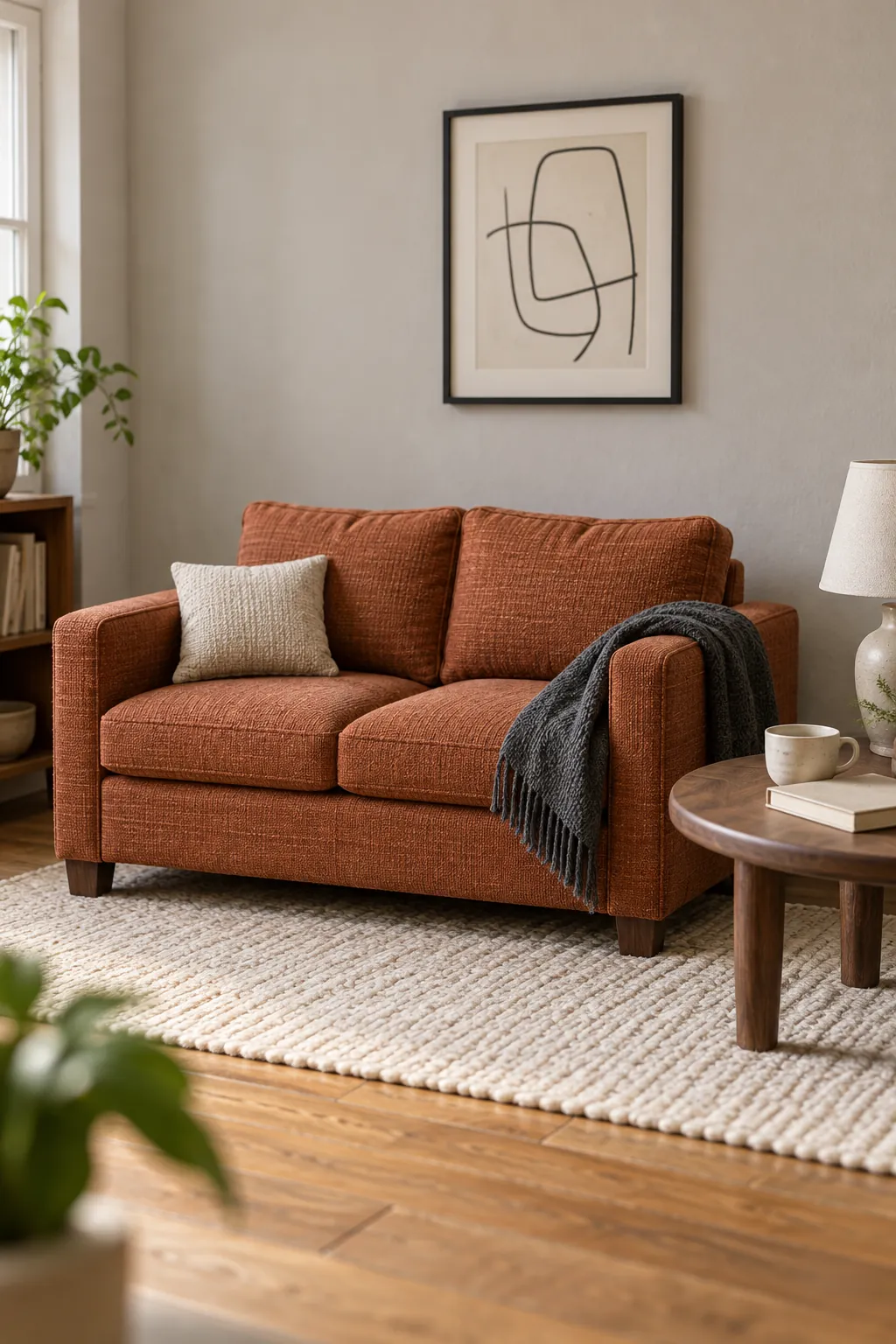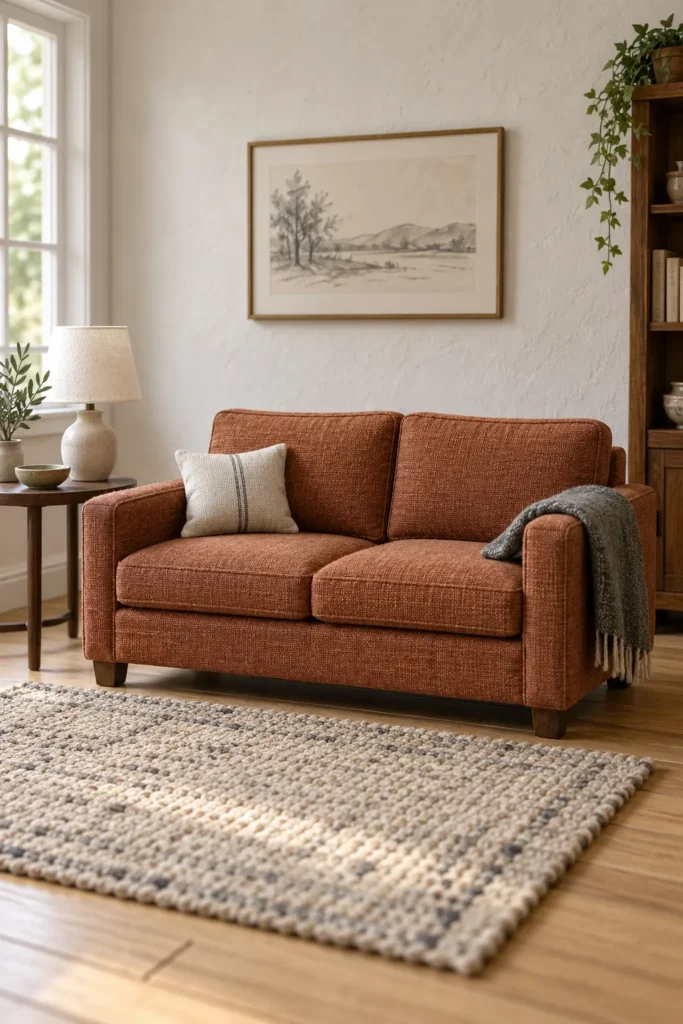
A miniature sofa can look soft and inviting even when its structure begins with plain cardboard. The main work is hidden inside: strong laminated parts, believable seat proportions, and fabric wrapped without bulky corners.
This no sew method uses separate upholstered sections, so you can correct a cushion or arm before final assembly. It also works with small fabric scraps that would be too limited for a larger project.
Set the sofa proportions with a paper pattern
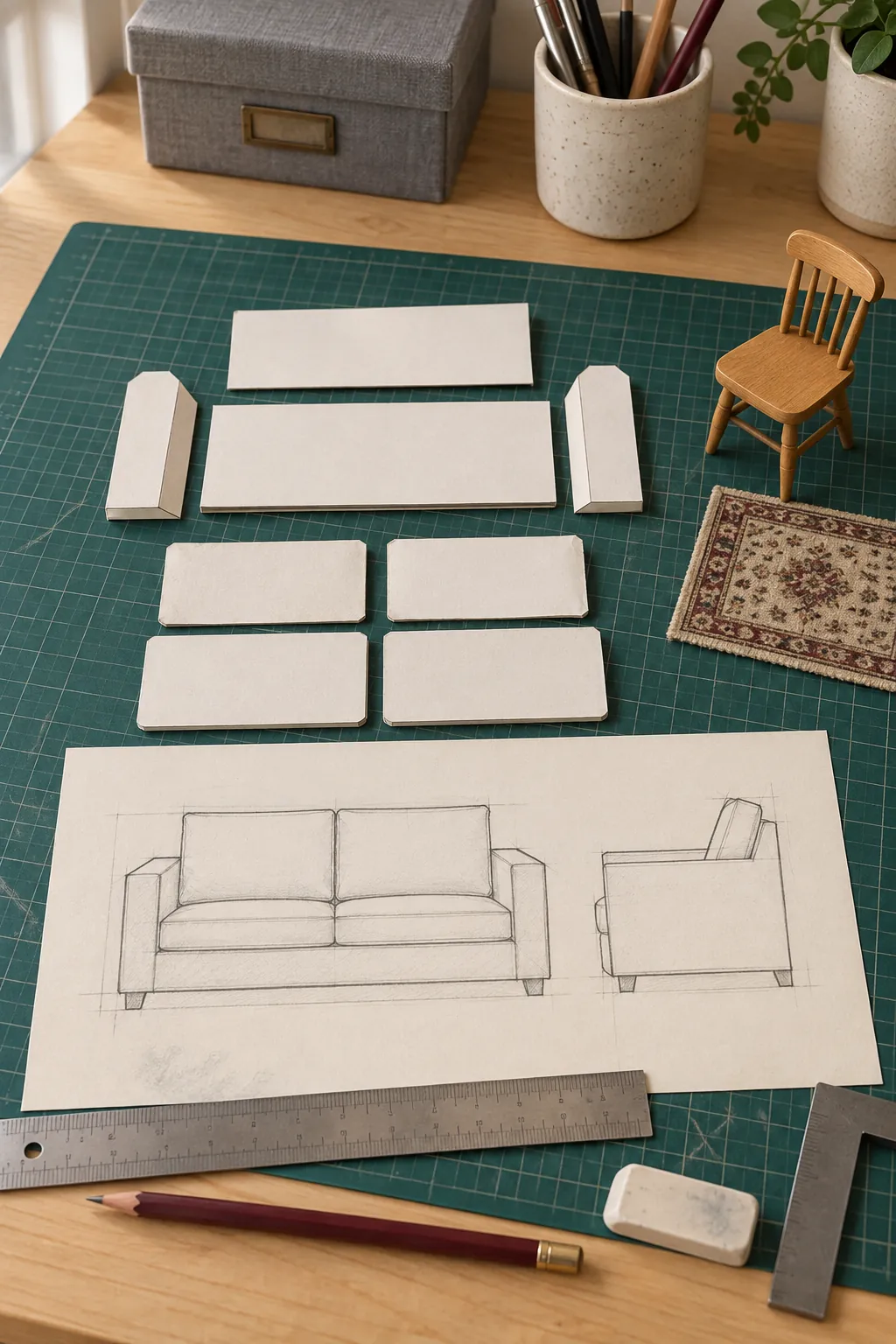
Measure the dollhouse room and compare the planned sofa with a chair or doll in the same scale. For one twelfth scale, a compact sofa around six inches wide gives two seats without overwhelming a small living room. Keep the seat lower than the arms and leave enough depth for a back cushion.
Draw the base, back, arms, and cushions as separate rectangles on paper. Cut them out and arrange the pieces in the room. This quick mockup catches a seat that is too deep or arms that are too tall before you laminate any card.
Laminate a strong cardboard frame
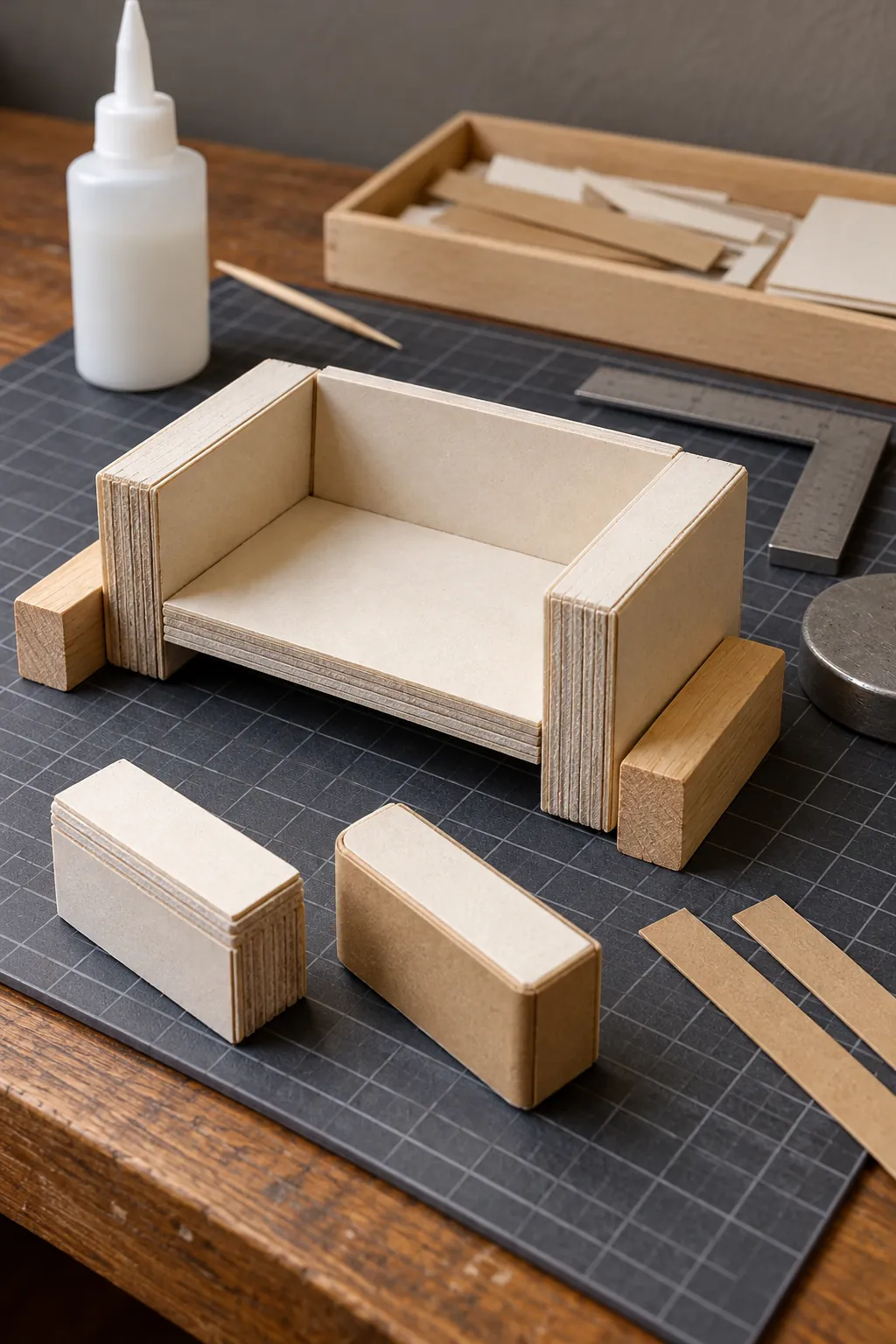
Cut each structural part from smooth card several times and glue the matching layers together. Alternate the direction of any visible grain or corrugation when you use thicker recycled card. The resulting base, back, and arms resist bending much better than a single layer.
Cover exposed edges with narrow kraft paper strips for a smooth upholstery surface. Dry the pieces beneath a light flat weight, then sand only obvious bumps. Assemble the bare frame square and let every joint cure before adding padding.
Add thin padding without losing scale
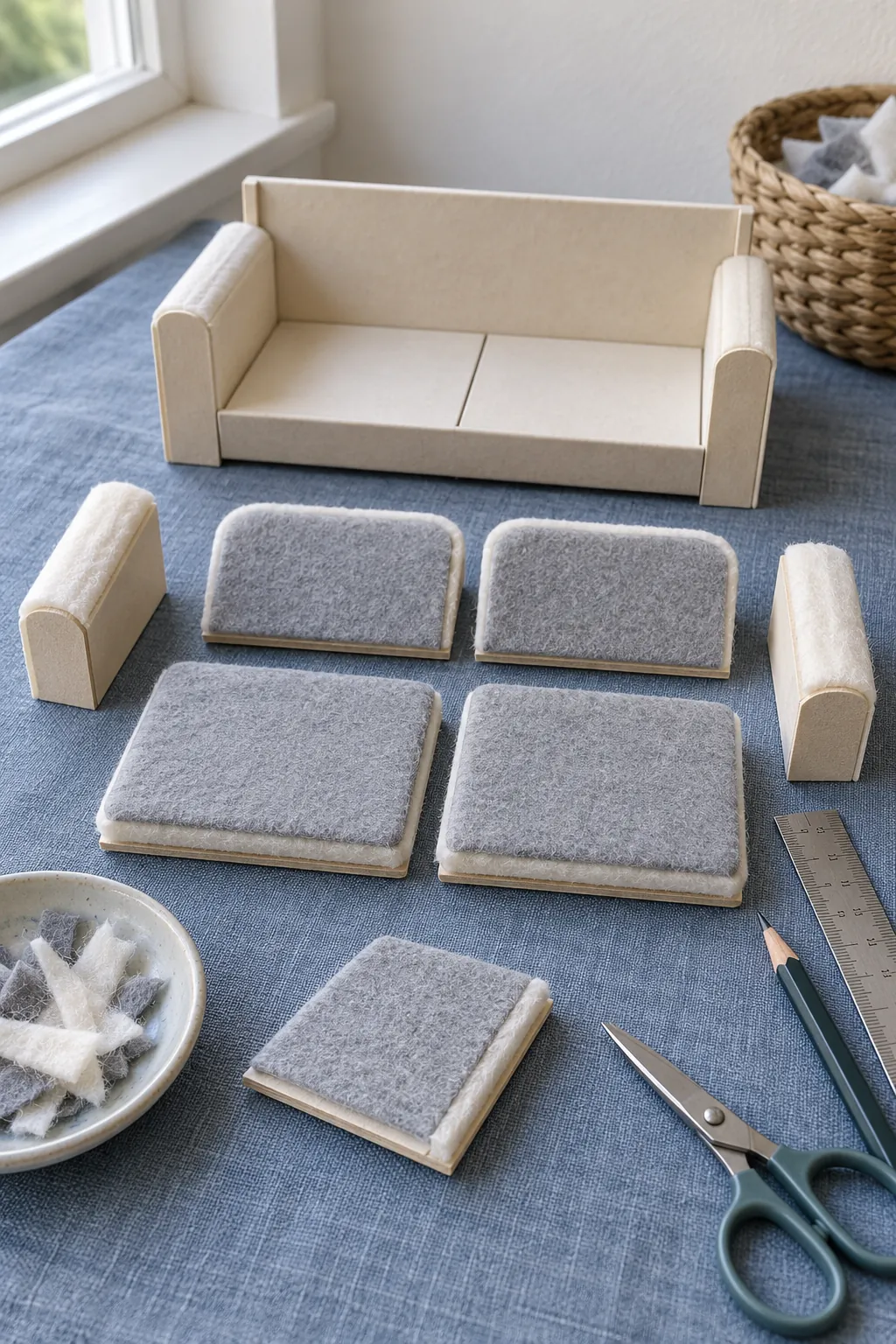
Use thin craft foam, felt, or a flat layer of batting on the seat, back, and arms. Thick household cushion foam can make a small sofa look swollen and reduce the usable seat. Trim padding just inside the edges so wrapped corners do not become lumpy.
Make loose cushions on separate card centers. Round their top edges with a narrow padding strip while leaving the bottom flatter. Test all padded pieces inside the frame and adjust them before fabric hides the shapes.
Choose and cut fabric that suits the scale
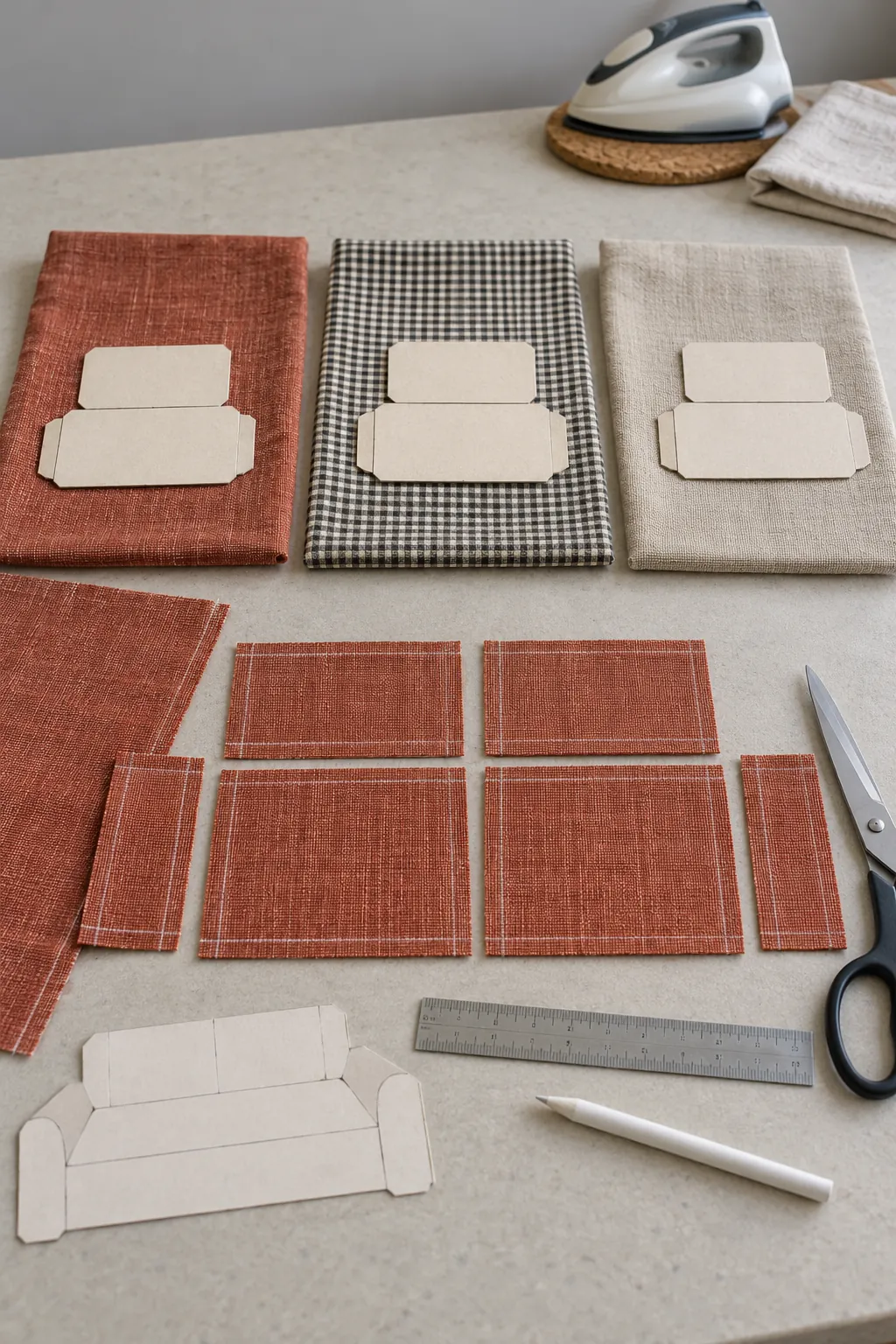
Light cotton, linen blend, or fine woven fabric wraps more neatly than thick upholstery cloth. Check that any print is small enough for miniature furniture. A large motif can disappear at the folds or make one cushion look unrelated to the next.
Press the scrap flat, then cut each piece with a modest wrapping allowance. Mark the center of the fabric and card on their hidden sides. Matching those marks keeps the weave straight and places a pattern consistently across the sofa.
Wrap each section with clean corners
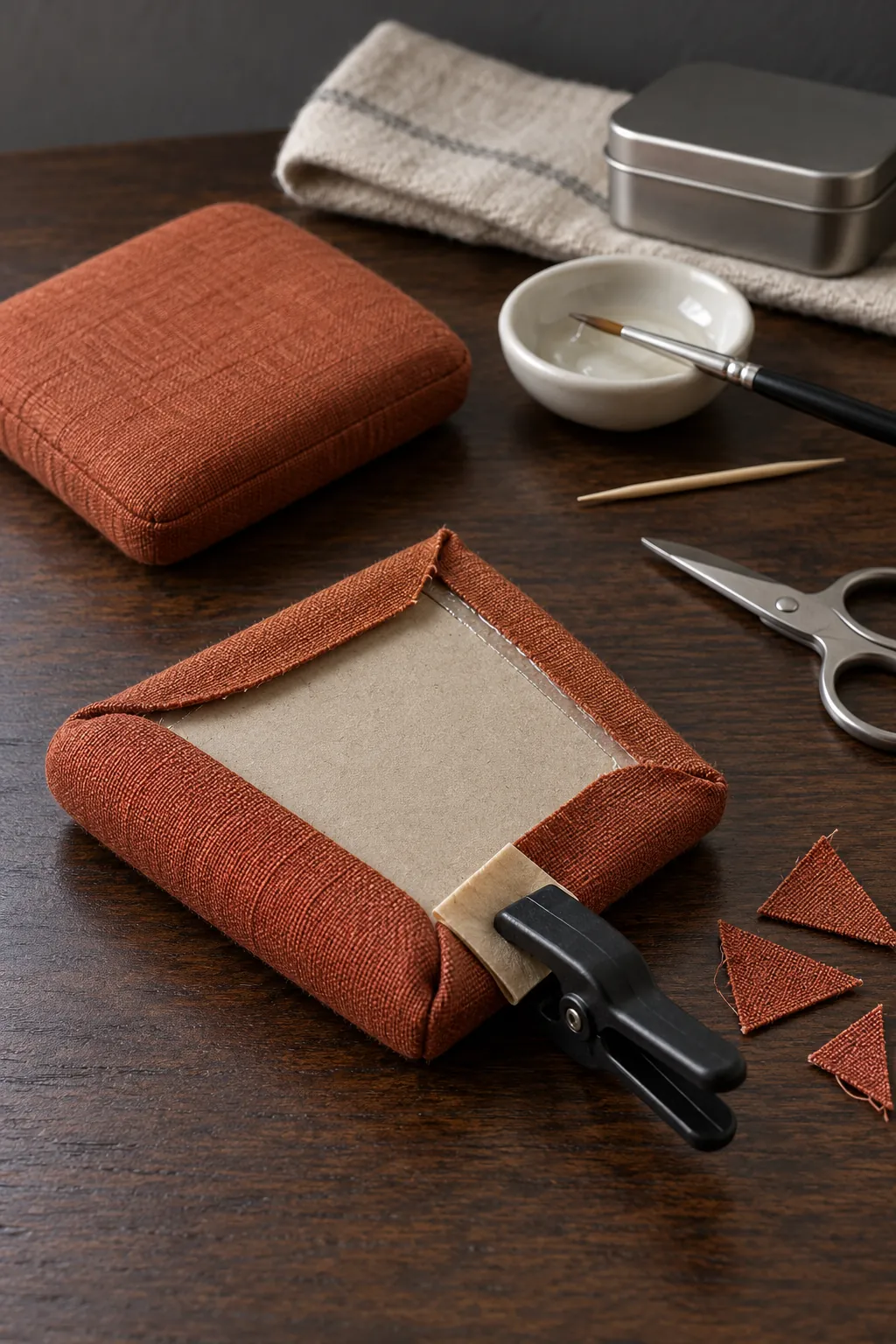
Apply fabric glue sparingly to the hidden back of one piece. Pull opposite sides snug, not tight, and secure them before folding the remaining edges. Excess tension bends card and can distort a small check or stripe.
At a corner, remove only the extra fabric that creates bulk, leaving enough material to cover the tip. Fold the layers in the same order on every cushion. Hold each fold with a smooth clip until dry, using scrap card between the clip and visible fabric to prevent marks.
Assemble and style the finished sofa
Glue the upholstered back and arms to the covered base, checking that both arms sit at the same height. Add seat and back cushions only after the frame is firm. Small wood beads, short dowels, or stacked card blocks can become feet, but keep them low and evenly spaced.
Place the sofa in the dollhouse living room and leave a little open floor around it. One tiny throw and a single accent pillow are enough to make it feel used without hiding the upholstery. The finished piece should support the room instead of filling every available inch.